Key facts: Emergency Water Damage Service
- Calls connect you with an independent Oregon restoration contractor 24 hours a day, 7 days a week, including holidays.
- The EPA advises drying wet materials within 24 to 48 hours to limit mold [1].
- Oregon contractors are licensed through the Construction Contractors Board, which has a public license search [2].
Is it an emergency?
When to call right now, and when it can wait until morning
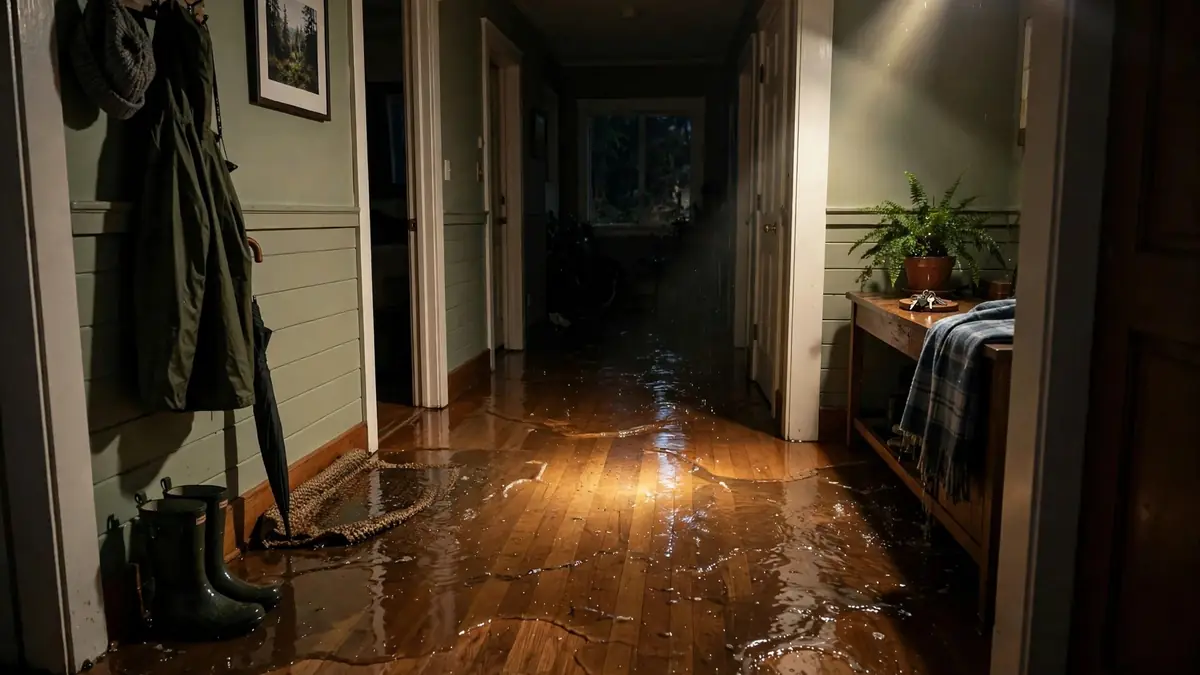
Call straight away if water is still coming in and you cannot stop it, if it has reached outlets or appliances, if a ceiling is sagging, if sewage is involved, or if water has been sitting for hours and spreading under floors. These are the situations where a few hours really do change the outcome, because wet materials need to be dry within 24 to 48 hours to limit mold, according to the EPA [1].
A small, stopped leak onto a hard floor that you have already mopped up is different. That can usually wait for normal hours, though a contractor can still tell you on the phone whether hidden moisture is likely. If you are unsure, call and describe it. There is no obligation to hire anyone.
On the phone
What to have ready when you call
You do not need much. Give your address or ZIP code, say where the water came from if you know, and say whether it has stopped. Mention roughly how many rooms are wet and whether there is a basement or crawlspace underneath, since both are common in Oregon homes and water often ends up there first.
Tell the contractor about anyone in the house who is elderly, very young or unwell, and about anything that makes access hard, such as a locked gate or a building manager. If you rent, mention that too, because your landlord will need to know. Ask what the crew will do on arrival and when you can expect them; the contractor will give you an answer based on where they are that night.
Sources
Finding the water shutoff in an Oregon home
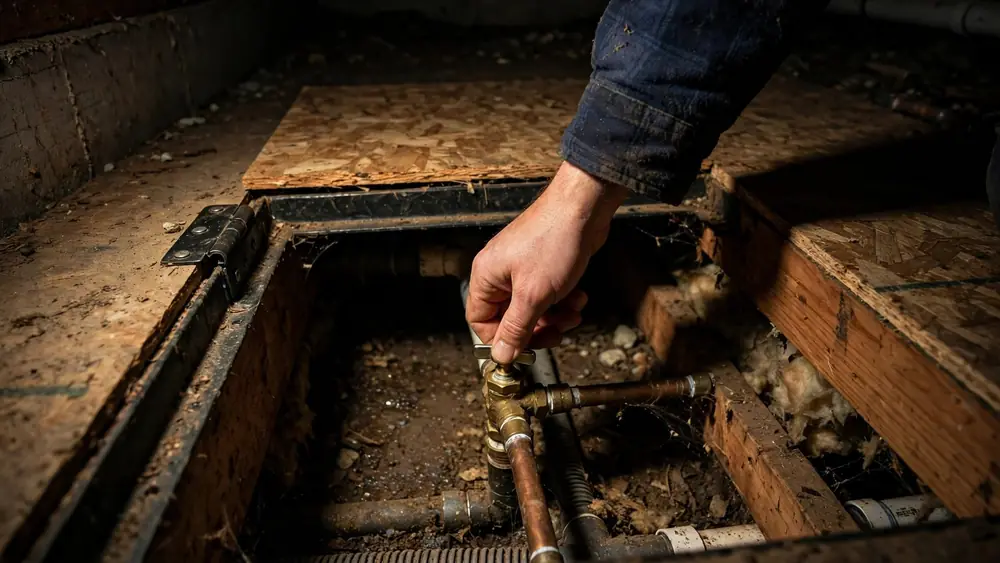
- Crawlspace homes: often just inside the hatch, or on the line near the foundation
- Homes with basements: on the front wall where the line enters
- Newer homes: sometimes in the garage, near the water heater
- Otherwise: in the ground box near the street, which may need a meter key
At night
Getting through the night safely
If the source is stopped, the job for the next few hours is simple: keep people safe and stop things getting worse. Turn off the breaker for any wet room, but only if the panel is dry and you can reach it without standing in water. Lift rugs, furniture legs and electronics off the wet floor if you can do so safely. Put foil or plastic under furniture feet to limit staining.
Do not run a household vacuum on standing water, and do not switch on ceiling lights in a room with a wet ceiling. Water that came from a toilet, a floor drain or outside is contaminated, so keep children and pets away and leave it for the crew. Sleep elsewhere if the house feels unsafe or the smell is strong.
Weather
Oregon emergencies at different times of year
Western Oregon gets most of its rain from November to January, and long wet spells can push groundwater into basements and crawlspaces overnight. Sudden cold is the other common cause. Pipes in crawlspaces and exterior walls can split in a freeze, and the leak often only shows up when things thaw and pressure returns. Central and eastern Oregon see harder freezes, so a burst pipe at dawn in Bend is a familiar call.
After a freeze, keep the main valve within reach as the house warms up, and check under sinks and along exterior walls. See burst pipe water damage for what happens after the first night, or flooded basement cleanup if the water came in from outside.
What happens next
From your call to a dry house
- 1
You call
You are connected with an independent contractor at any hour.
- 2
Inspection
The crew finds where the water went and checks for safety hazards.
- 3
Extraction
Standing water comes out first, since it dries far faster that way.
- 4
Drying
Equipment runs and moisture readings show when materials are dry.
Insurance
Protecting your claim during an emergency
You do not need your insurer to approve emergency steps that prevent further damage, though policies differ, so read yours when you can. Most policies expect you to take reasonable steps to limit damage, which includes stopping the water and starting to dry out. Keep receipts for anything you buy and for any hotel stay. Report the loss as soon as you reasonably can; many insurers run a claims line at all hours.
Take wide photos of each room and close-ups of damage before anything moves. Keep damaged items if you can until your adjuster has seen them. Be careful with anything you sign at a stressful moment: read it, and ask whether it covers only the emergency work or the whole repair.
Choosing
Questions to ask, even at 2 a.m.
An emergency is not a reason to skip the basics. Oregon contractors are licensed through the Construction Contractors Board, which runs a public license search, so note the company name and check it when you can [2]. Ask whether the crew will take moisture readings and give you the records, and whether your insurer will receive those records too. Ask who to call if something seems wrong after they leave.
A good crew will explain what it is doing as it goes. Be wary of pressure to sign a large agreement before anyone has looked at the damage, or claims that everything must be torn out immediately without readings to support it.
FAQ
Emergency water damage questions
Can I really call at any hour?
Yes. The line connects you with an independent contractor 24 hours a day, 7 days a week, including holidays.
How fast will someone arrive?
That depends on your location, the time and how busy crews are. Ask on the call; the contractor can tell you what to expect that night.
Should I turn the power off?
Only if the panel is dry and you can reach it without standing in water. If not, stay out and call your utility.
Can I wait until morning?
If the water has stopped and the area is small, often yes. If it is still spreading or reached electrics, call now.