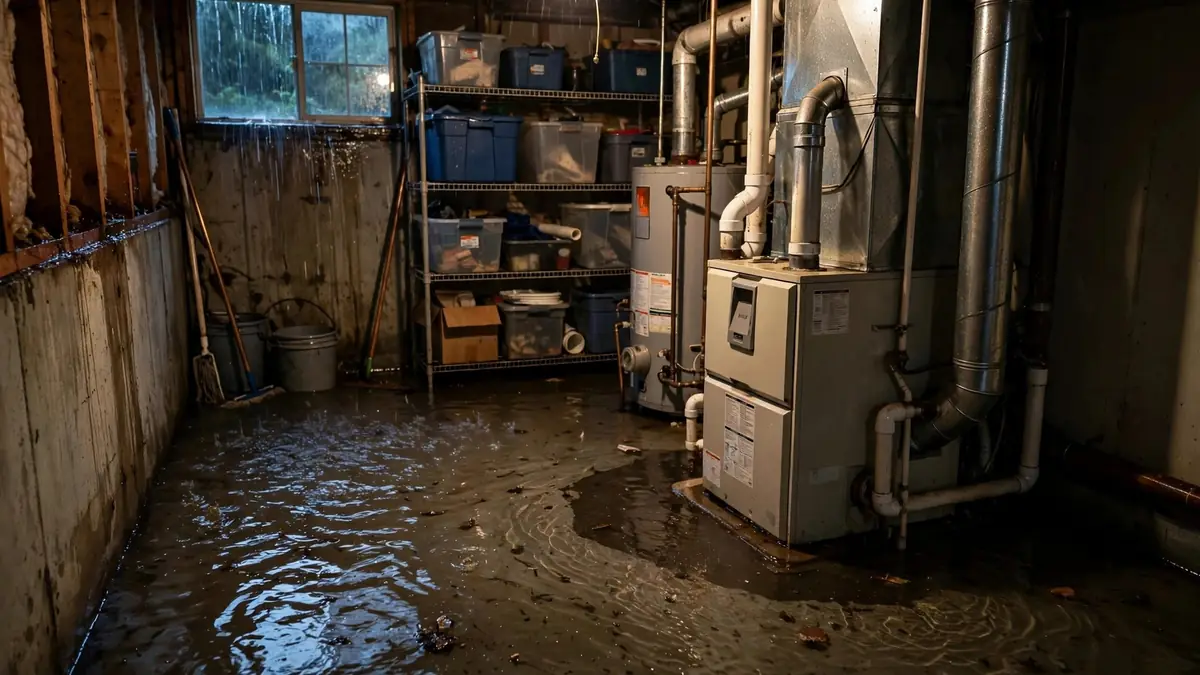
Key facts: Emergency Flooded Basement Service
- Do not enter a flooded basement until power to it is confirmed off.
- Standard homeowners policies typically exclude outside flood water; separate flood insurance covers it.
- Help is a phone call away 24 hours a day, including holidays.
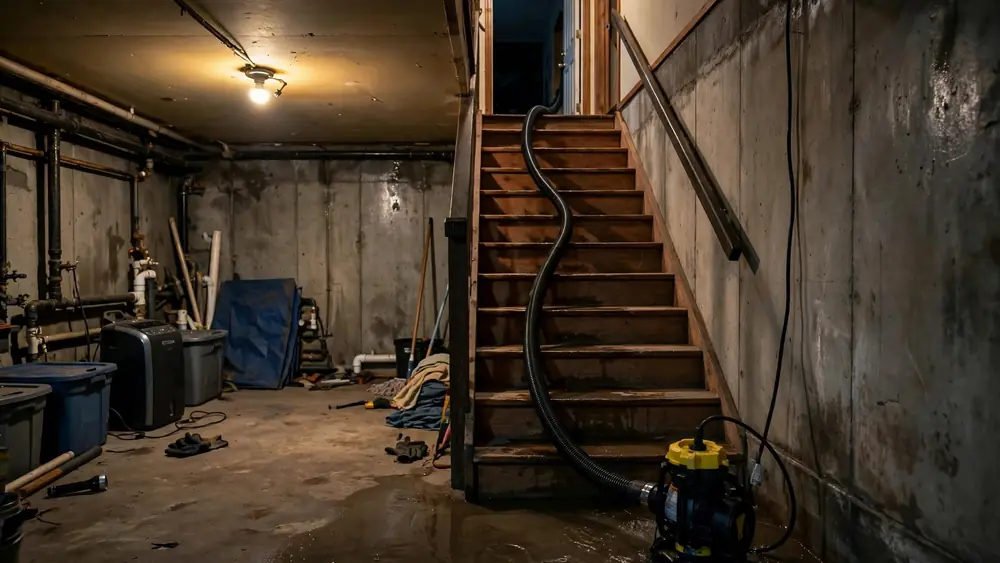
Power
If the panel is in the basement
Plenty of older Oregon houses keep the electrical panel downstairs, sometimes on the wall the water is climbing. If you cannot reach it on dry ground, do not try. Call your electric utility, explain that the panel is in a flooded basement and ask them to cut power at the meter. Pacific Power and Portland General Electric both publish their emergency and outage numbers on their websites.
Gas needs the same care. A furnace or water heater that has been under water should stay off until a qualified technician has checked it, even after the water has gone. Do not relight anything by yourself.
Why now
Rain, groundwater and other reasons Oregon basements flood
Most Oregon basements flood during long wet spells, not sudden storms. Saturated ground pushes water through the joint where the wall meets the floor, and a sump pump may run for days before it falls behind or fails. River flooding, downspouts dumping near the foundation and sewer lines backing up can also be to blame. Each cause means something different for the cleanup, and groundwater can return if the rain continues.
Pumping out a basement fast while the soil outside is saturated can even harm the walls, since pressure from outside is no longer balanced by the water inside. A contractor will judge how quickly to pump in those conditions, so a slow start is not always a bad sign.
After you call
How a basement emergency usually unfolds
- 1
Hazards
Power and gas are confirmed safe before anyone goes down.
- 2
Pumping
Water is lowered at a rate that suits the conditions outside.
- 3
Sorting
Wet belongings are photographed and sorted with you.
- 4
Drying
Materials are removed where needed and equipment is set.
Belongings
Protecting what you can without going down
Anything still dry on upper shelves can wait until the crew says it is safe. Important papers and photo albums are worth protecting first when you can reach them; if they are already wet, put them in a freezer bag later, as freezing buys time before they are dried. Do not carry heavy wet boxes on slippery stairs, because the bottoms give way.
Assume water from outside or a drain is contaminated. Wash your hands after touching anything it reached, and keep food items that touched it out of the kitchen for good.
Insurance
Flood or water backup? It matters for your claim
Standard homeowners policies typically exclude flood from outside, which is covered by separate flood insurance. Sewer and sump backup is often an optional add-on, so check whether you have it. You do not need all the answers tonight. Note the time you found the water, take photos of how high it reached from the stairs, and record any marks on the wall before it goes down.
Tell your insurer about the loss as soon as you reasonably can, and describe what you saw instead of guessing the cause. A contractor's records of where the water came in can help the adjuster later.
Good to have
What to mention on the call
- How high the water has reached, even roughly
- Whether the panel, furnace or water heater is downstairs
- Whether it has been raining and whether a sump pump is running
- Whether the basement is finished
- Any sewage smell
Finished rooms
Finished basements take longer
A finished basement with carpet, pad and drywall holds a lot more water than bare concrete. Pad is usually removed, and lower drywall and insulation may be cut out so that the wall can dry. The EPA advises drying wet materials within 24 to 48 hours to limit mold [1], which is hard to do behind finished walls. Ask how the crew will check behind them, and get readings in writing before anything is closed back up.
Sump pumps
If the sump pump has stopped
A sump pump failure is one of the commonest reasons a basement fills at night, particularly in a storm when power is out. If the pump has quit and the outlet is above the water and dry, you can check whether the breaker has tripped from the panel, provided the panel is safe to reach. Do not reach into a flooded pit or handle a cord that is lying in water. A battery backup can only run for a limited time, so a backup that is beeping is a warning. Tell the contractor if the pump is running constantly but the level still rises; it may be overwhelmed, or the discharge line may be frozen or blocked.
Older homes
Older foundations and stored items
Many older Portland, Salem and Eugene houses have basements that were never meant to stay dry, with concrete or block walls and little waterproofing. They may also store old paint, solvents and cleaners that can leak into flood water. If you see a sheen on the surface or smell fuel or chemicals, stay out and mention it on the call, since it changes how the water must be handled. In a house built before 1978, old paint may contain lead, and old pipe wrap or floor tile may contain asbestos. Tell the crew the age of the house so that they can check before anything is cut or removed.
Next day
What to expect in the following days
Even after the water is out, a basement can take days to dry, longer if walls are finished or the weather stays wet. Expect fans and dehumidifiers, some removal of wet materials and a certain amount of noise. Ask for a simple daily update, including the readings. Before anyone rebuilds, make sure the cause has been dealt with, whether that is a new pump, regrading or better downspouts. Otherwise the same night can repeat itself in the next long rain.
FAQ
Flooded basement questions
Should I start pumping right away?
Not before power is safe. In saturated ground, a contractor may pump in stages to protect the walls.
Will insurance cover it?
It depends on the cause and your policy. Flood from outside usually needs separate flood insurance.
Is the water dangerous?
Treat it as contaminated if it came from outside or a drain, and keep skin contact to a minimum.
Can it wait until morning?
If the water is rising or the panel is downstairs, do not wait. Call and get advice now.