Key facts: Emergency Burst Pipe Service
- Close the main water valve first, then open a low faucet to drain the lines.
- Frozen pipes often leak only once they thaw, so keep the valve within reach as the house warms.
- Phone lines reach an independent Oregon contractor around the clock, holidays included.
The valve
If you cannot find the shutoff
Look where the water line comes into the house. In a crawlspace home this tends to be just inside the hatch or along the front foundation. With a basement, check the front wall. In a newer house, try the garage or near the water heater. If you cannot find it inside, go to the meter box near the street, where a meter key can close the utility valve. If you are stuck, call your water provider and ask whether a crew can close the street valve. In Portland, the Water Bureau's dispatch line, 503-823-4874, is staffed 24 hours a day for water emergencies and sudden service problems [3]. Elsewhere, look up your own provider's number before the next freeze.
Once the valve is closed, open a faucet at the lowest point of the house and one upstairs. That drains the pipes and takes pressure off the break. A burst hot water line calls for shutting off the water heater, using the gas valve or the breaker, so that it does not run dry.
Freezes
Why a pipe can burst hours after the cold hits
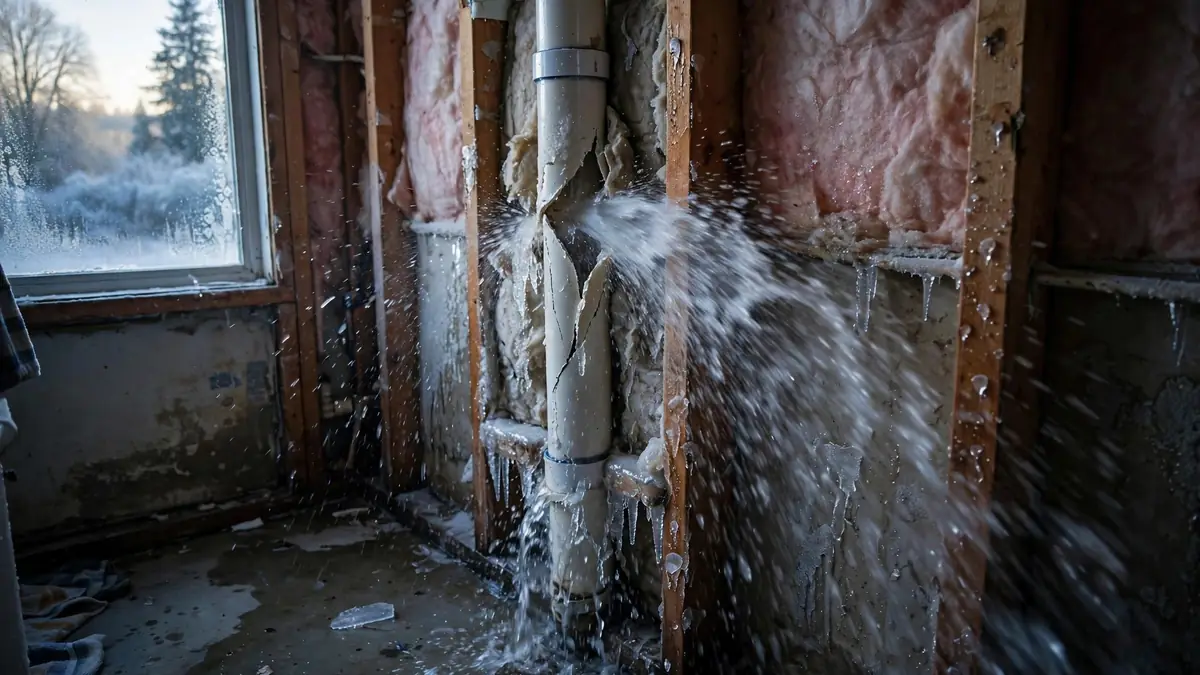
In a freeze, an ice plug forms in the pipe and pressure builds behind it. The pipe may split without leaking a drop, because the ice is holding the water back. When it thaws, often the next morning, the water finally runs. That is why so many Oregon burst pipe calls come as the temperature climbs. Pipes in crawlspaces, unheated garages and exterior walls are the usual ones. Western Oregon homes in particular may not be built with hard freezes in mind.
If one pipe froze, others may have too. If a faucet is only trickling, keep it open and warm the area slowly with a hair dryer or a space heater kept clear of anything flammable. Never use an open flame, which is a common cause of house fires during cold snaps.
After you call
From burst pipe to dry walls
- 1
Repair
A plumber fixes the break, since the restoration crew dries the house.
- 2
Tracing
Moisture meters and thermal cameras follow the water.
- 3
Opening
Small sections may be opened to reach trapped water.
- 4
Drying
Air movers and dehumidifiers run until readings match dry materials.
Ceilings
Wet ceilings and electrical hazards
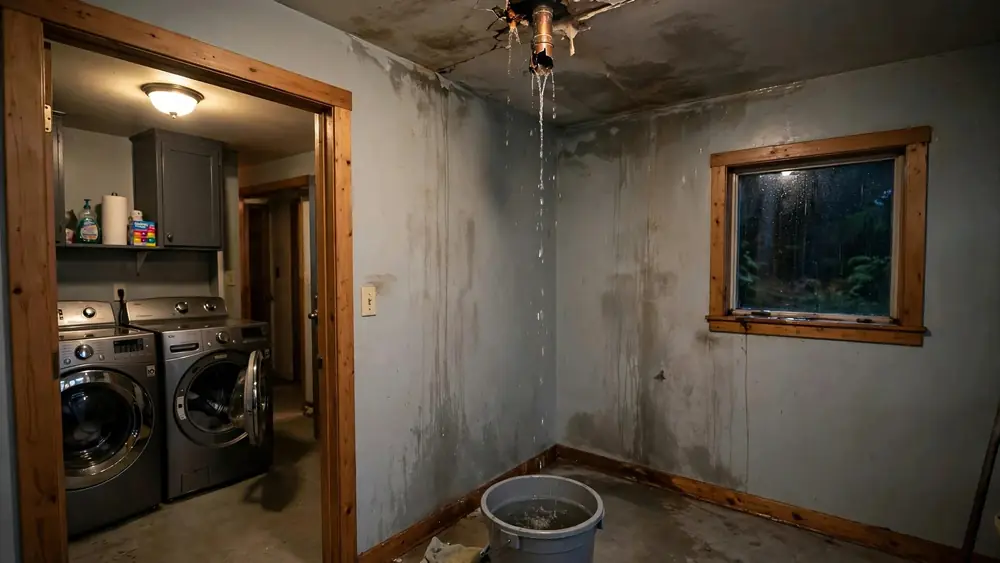
A ceiling holding water can come down with no warning. Signs include a sag, a bulge, spreading cracks or water running from a light fixture. Keep out of that room, close the door and move what you can from a distance. Turn off the breaker for that circuit if the panel is dry and safe to reach, and do not use the light switches. Have an electrician check any fixture or outlet that got wet before it goes back into use.
Do not pull down wet drywall yourself. Older ceilings can be plaster and very heavy, and homes built before about 1980 may contain materials that need testing before they are disturbed.
Call two people
Plumber or restoration crew?
- A plumber repairs the pipe
- A restoration contractor removes water and dries the structure
- Your water utility can close the street valve if needed
- Your insurer needs to hear from you as soon as you reasonably can
- Your landlord or manager needs to know right away if you rent
Insurance
Photos and receipts for a burst pipe claim
Most policies treat a sudden break differently from a slow leak, so note when you found it and what you saw. Keep the broken section of pipe if the plumber can save it, and photograph it before it leaves. Keep the plumber's invoice with the description of the failure. Take pictures of each room, the ceiling and anything damaged before cleanup starts. The EPA advises drying wet materials within 24 to 48 hours to limit mold [1], which is another reason to record when drying began.
Later
Stopping it happening again
Once things are dry, ask what caused the break. Insulating pipes in the crawlspace or garage, sealing vents during a freeze and disconnecting garden hoses can all help. When a cold snap is forecast, a slow trickle from a faucet on a vulnerable line can reduce the risk. Keep cabinet doors open on outside walls. If you travel in winter, consider shutting off the main valve before you go, and make sure everyone at home knows where it is. Ask the contractor to note any old supply lines or fittings seen while the wall was open, since a second failure is easier to prevent than to clean up.
Hidden leaks
When you cannot see where the water is going
A pipe can break behind a wall or under a floor with little to show at first. Listen for running water with every tap off, and watch the meter: if the dial keeps moving, water is leaving the pipes somewhere. Paint that bubbles, baseboards that swell and a warm patch on a floor can all point to the place. A warm patch suggests a hot water line, which may also make the water heater run constantly. Do not cut into walls to look for it. The plumber can pinpoint it, and photos taken before anything is opened will help with your claim. Keep the main valve closed in the meantime, opening it only when you need water and only for as long as you are watching.
Ice storms
When the same storm brings down power lines
The cold that splits a pipe can also bring down utility lines, and a house without heat keeps getting colder. Treat every downed line as live and stay at least 50 feet away. Call 911 first, then your electric utility. PGE takes downed-line reports at 503-464-7777 or 800-544-1795 [4], and Pacific Power takes them at 1-877-508-5088 [5]. Those numbers are for the hazard outside, not for your plumbing. If an outage is leaving the house cold, close the main valve and drain the lines while you wait for power, since an empty pipe has little water left to freeze.
FAQ
Burst pipe emergency questions
Who do I call first?
Close the valve, then call. A plumber fixes the pipe and a restoration contractor handles the water damage.
Is holiday help available?
Yes. The line reaches an independent contractor at any hour, including holidays.
Should I turn the heat up?
Keep the house warm if the system is safe, which helps other frozen lines, but do not run it if the furnace got wet.
Can I stay in the house?
Often yes if the water is off and ceilings are sound. Leave if power is unsafe or ceilings are sagging.