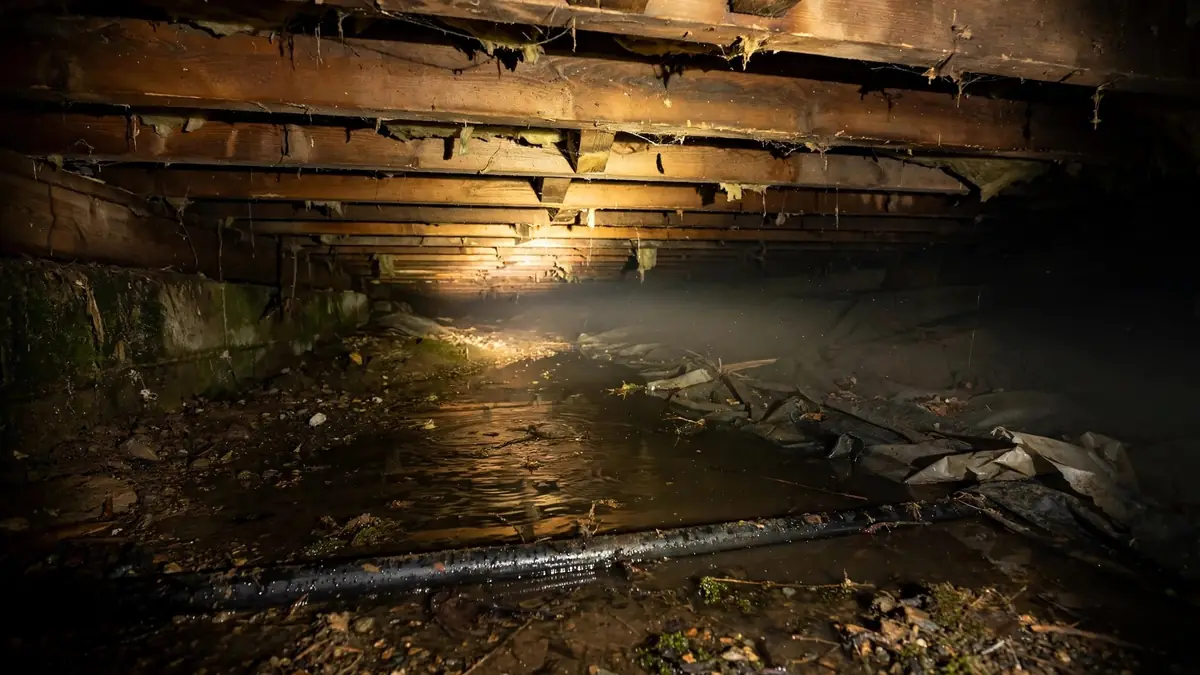
Key facts: Emergency Crawlspace Water Service
- Do not enter a flooded crawlspace: wiring, sewage and low air quality are all possible hazards.
- A running water meter with every fixture off can point to a hidden leak.
- Call at any hour, including holidays, to reach an independent contractor.
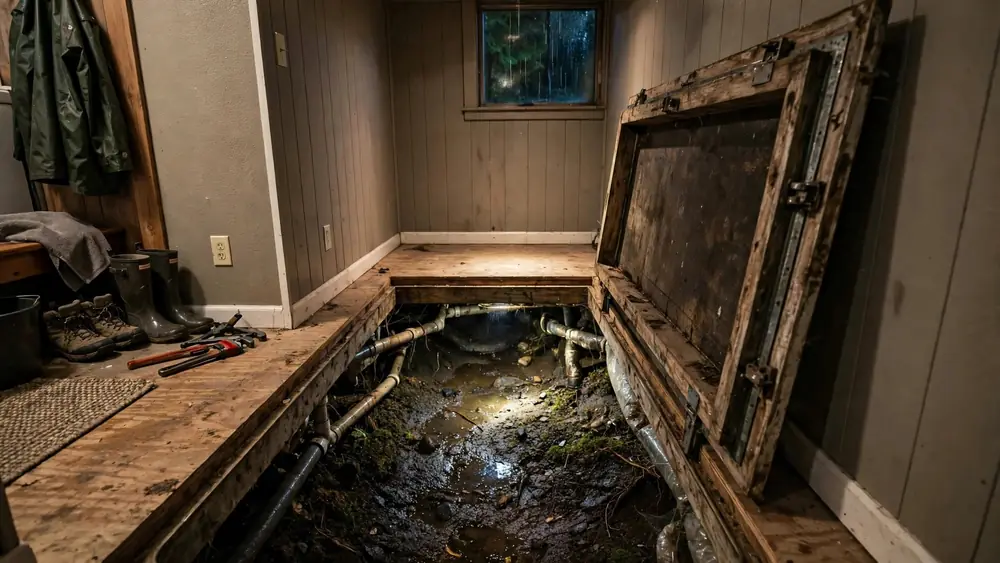
Signs
How you know there is water underneath
Often the clue is not visible at all. It may be a musty or sewer smell through the floor registers, a cold floor that feels soft, an unusual humidity, or a heating duct that blows damp air. A sump or pump running day and night is a sign, as is water seeping out of foundation vents after rain. An unexplained rise in your water bill or a meter that spins with everything turned off suggests a leak under the house.
Ducts matter here. Many Oregon homes run heating ducts through the crawlspace, and if they are sitting in water, the furnace can pull damp air into the house. Turn off the heating until someone has checked, if there is standing water around the ducts.
Causes
Rain, plumbing or sewer?
Heavy rain raising the water table is a common cause, and water can sit on the vapor barrier for days after a long wet spell. A broken supply line under the house is different, since it will keep filling until shut off. A sewer leak is the most serious, because of the contamination. Look for any smell, and tell the contractor. Check whether downspouts or the yard are draining toward the house, too, as this is often the simple cause of water showing up after each storm.
You can help by closing the main valve if a leak seems likely, and by checking that any sump pump has power, as long as it can be reached safely from outside.
After you call
How a crawlspace emergency goes
- 1
Safety
Power and air are checked before anyone goes under.
- 2
Pumping
Standing water is pumped out through the hatch or a vent.
- 3
Removal
Wet insulation and vapor barrier are pulled out where needed.
- 4
Drying
Dehumidifiers and air movers run with moisture checks on joists.
Damage
What water does under a house
The floor system takes the damage first. Insulation between the joists can hold water and sag, or fall off onto the ground. Wet vapor barrier traps water against the soil, and joists and subfloor can absorb moisture until they feel soft from above. Given that the EPA advises drying wet materials in 24 to 48 hours to limit mold [1], crawlspaces are a challenge, since air barely moves there and Oregon winters provide little natural drying.
Mold can then grow on joists without anyone seeing it. It is not always a disaster, but it does need dealing with properly. Ask for photos of what the crew finds, since you are unlikely to go under the house and check.
Details
What to mention on the call
- Whether the hatch is inside or outside
- How deep the water looks from the hatch
- Any smell of sewage or fuel
- Whether ducts or a furnace sit under the house
- Whether a sump pump is installed and running
Hazards
Why crews take precautions down there
Older crawlspaces may hold fiberglass, droppings, old pipe insulation and exposed wiring. Radon, a gas from the rock and soil below a house, runs higher in parts of Oregon, including parts of Portland and the Willamette Valley [3]. Crews wear protective gear and may check electrical circuits first. Do not send a family member or friend down there as a favor, even for a look. A flashlight and a phone camera at the hatch usually tell you enough for the first call. Keep pets and children away from an open hatch, especially at night, and close it once you have looked.
Later
Keeping it from coming back
Once dry, the crew can tell you what let the water in. Common fixes are extending downspouts, regrading soil around the foundation, adding or repairing a vapor barrier and installing a sump pump. Older Oregon homes sometimes benefit from a drainage system around the footing. Have a licensed contractor look at bigger fixes once the emergency is over, and check their license through the Construction Contractors Board [2]. After the next heavy rain, take a look from the hatch to confirm the fix is doing its job.
Timing
Why waiting for dry weather does not work
It is tempting to wait for the rain to stop and hope the water drains away. Sometimes it does, depending on the ground. Clay built up in parts of the Willamette Valley as ice age floodwaters settled, and clay holds water tightly [4], so a house on that soil may stay wet underneath well after the rain has passed. Meanwhile the moisture rises into joists, insulation and the air inside your home. A short look from a contractor can tell you whether it is safe to wait.
From above
Useful checks that keep you out of the hatch
Take a photo from the hatch opening, then take another from the same spot an hour later. Two pictures show whether the level is rising, which is hard to judge by eye in a dark space. Read the water meter twice, about 15 minutes apart, with nothing running, and write both numbers down. If you smell gas or fuel, skip all of this, leave the house and call 911 from outside. Treat any wiring you can see touching water as live, and stay away from the breaker panel if the floor around it is damp. These notes take little time and give whoever answers the call something specific to work with.
FAQ
Crawlspace emergency questions
Is a little water under the house an emergency?
A thin layer after rain may not be. Rising water, a running meter or a sewage smell is a reason to call now.
Should I run the furnace?
Not if ducts or the unit are sitting in water. Keep it off until someone has checked.
Can I pump it out myself?
It is safer not to. There can be live wiring in the water, and sewage needs special handling.
Do you take holiday calls?
Yes. The line connects you with an independent contractor at any hour, including holidays.