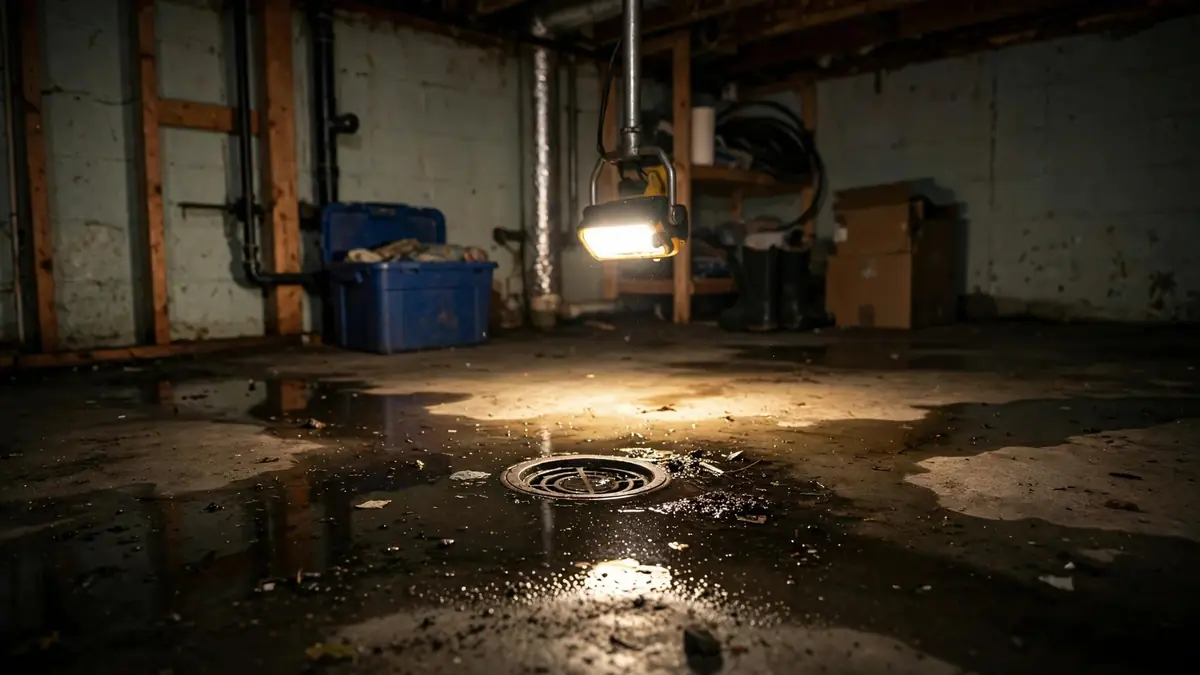
Key facts: Emergency Sewage Backup Service
- Sewage is treated as Category 3 water under the IICRC S500 standard, the most contaminated class.
- Stop using all water in the house during a backup.
- Help is reachable by phone 24 hours a day, including holidays.
Whose line
Is it your line or the city main?
Run through it quickly: if only one fixture is affected, the blockage may be close to that drain. If a basement floor drain or the lowest toilet is backing up when other fixtures run, the main line from the house is more likely. If several neighbors have problems, or it came on during heavy rain, the public sewer may be overloaded. Report it to your city or sewer district in that case, so the main can be checked. Portland takes sewer emergency reports 24 hours a day at 503-823-1700, though it suggests a plumber first when the backup is inside the home [4]. Salem lists Public Works Dispatch at 503-588-6311 [5]. Eugene lists sewer maintenance at 541-682-4800 [6]; after hours, the city points to 911 for emergencies such as major flooding [7]. In other towns, check your own provider's number.
A plumber or sewer contractor clears your own line, and a restoration contractor cleans up the home. Some lines can only be cleared with a camera or jetting, which is worth asking about if the backup has happened before.
Health
Keeping people safe until the crew arrives
Anyone with a weakened immune system, young children, older relatives and pregnant people should stay out of the house until cleanup is complete, if they can. If you have to walk through an affected area, wear rubber boots, gloves and eye protection, and wash thoroughly afterwards. Wash clothes separately in hot water, if the machine is not on the affected line. Keep food, dishes and toothbrushes away from any splashes.
If someone has an open wound that touched sewage or becomes ill after exposure, get medical advice. Do not use a fan to dry the area, since it can spread contamination through the house.
After you call
How a sewage emergency is handled
- 1
Stop
The blockage or overload is dealt with first.
- 2
Contain
Barriers and protective gear keep it from spreading.
- 3
Remove
Contaminated water and porous materials come out.
- 4
Clean
Surfaces are cleaned, disinfected and dried.
Materials
What cannot usually be saved
Carpet, pad, insulation, particle board and drywall that sewage reached are usually removed, because they cannot be reliably cleaned. Hard surfaces such as concrete, tile and sound framing can often be cleaned and disinfected. Sentimental items may be worth asking about, and specialists can sometimes treat them. Restoration crews generally work to the IICRC S500 water damage standard [3] and treat a sewage backup as Category 3, the most contaminated class of water.
Take pictures before anything leaves the house, and keep a list of what was thrown out, since your insurer may ask for it.
On the phone
What the contractor will want to know
- Where the sewage came up, and whether it is still rising
- How many rooms it has reached
- Whether carpet, drywall or a furnace is affected
- Whether anyone in the home is vulnerable
- Whether a plumber has already been called
Insurance
Check for a backup endorsement
Many standard homeowners policies do not include sewer backup unless you added an endorsement, so look for it in your paperwork or ask your agent. If the public main caused it, ask your city how to report a claim, and do so quickly, since cities often have short deadlines for filing. Keep invoices and photos whichever way it goes. Tenants should tell the landlord or manager straight away, in writing as well as by phone.
Afterward
Before you move back in
Do not rush back because the room looks clean. Ask the crew how they confirmed the area is clean and dry, and ask for written notes on what was removed and what was disinfected. The EPA advises drying wet materials within 24 to 48 hours to limit mold [1], and that applies here too, once the contaminated material is out. If backups recur, a camera inspection may show a root problem or a sagging line, and a backwater valve may be worth discussing with a plumber. Check that the crew replaced your furnace filter if the system ran during the event.
Clean or not
How to tell if it is really sewage
A backup is not always obvious. Water coming up a floor drain may be gray and only smell faintly, particularly after a washing machine has run. Treat it as contaminated anyway if it came from any drain, toilet or sewer line. Solid material, a strong smell or toilet paper in the water all confirm it. A gurgling toilet when the washer drains, or water rising in a shower when someone flushes, are warning signs that can appear hours before a real backup. If you catch those signs, stop using water straight away and call. That may save you the worst of it. Older homes with clay or Orangeburg sewer lines are particularly prone to root blockages in Oregon's wet winters.
Small spills
If you have to deal with a small spot on a hard floor
Portland's sewer bureau gives plain advice for anyone cleaning up without a crew: gloves, boots and rain gear, and no sewage near your face or eyes [4]. Wash any cut or scrape that touches it straight away. Clean the surface with hot, soapy water first, then disinfect with one part household bleach to ten parts water [4]. Open a window while you work, and never add ammonia products to bleach. Wash and disinfect your clothes and tools afterward, then scrub your hands. This is only for a small area of tile or concrete. Soft materials, or a spill that has spread into another room, are for a restoration contractor.
FAQ
Sewage emergency questions
Can I clean a small backup myself?
A small amount on a hard floor may be manageable with protection. Anything that reached carpet or drywall needs professionals.
Should I leave the house?
If sewage covers living areas, or anyone is vulnerable, it is safest to stay elsewhere until it is cleaned.
Does it matter that it is a holiday?
No. The line reaches an independent contractor at any hour, including holidays.
Who clears the blockage?
A plumber clears your line. Your city handles the public main. A restoration crew cleans the home.
Sources and citations
- [1]U.S. EPA — A brief guide to mold, moisture and your home
- [2]Oregon Construction Contractors Board
- [3]IICRC — S500 water damage restoration standard
- [4]Portland Environmental Services — What to do after a sewer backup
- [5]City of Salem — Water, sewer or street emergency
- [6]City of Eugene — Public Works directory
- [7]City of Eugene — Getting in touch with Public Works
- [8]Oregon Revised Statutes — ORS 90.320, landlord duty to maintain